Efficient Seed Distribution: How Drones Are Changing the Game for UK Farmers
Rethinking How We Put Seed in the Ground
For years, getting seed from the bag to the soil meant dragging heavy machinery across the field, compacting the ground, and hoping the weather held. I remember watching my father spend a whole weekend drilling oilseed rape, only for a sudden downpour to wash half of it into the ditch. That frustration is familiar to many in UK Agriculture, and it is why I have been so interested in the shift toward aerial methods. Drones are not just a novelty for taking pretty pictures of your farm. They are becoming a serious tool for efficient seed distribution, especially on land that is awkward, wet, or simply too small to justify a big tractor pass.
The idea is not to replace the drill entirely. No one is suggesting we scatter every wheat field from the sky. But for cover crops, grass, and certain break crops, broadcasting seed from a drone can save time, protect soil structure, and get the job done at exactly the right moment. That last point matters more than people think. A week of delay in September can mean a poor green cover all winter, and with Natural England and the Rural Payments Agency watching how you manage your land, those delays have real financial consequences.
Why Drones Make Sense for Seed
Let me walk you through a typical scenario. You have a 10-hectare field that is too steep for your old drill, or maybe it is just a patch you want to put into a wildflower mix. Firing up a 12-metre seed drill feels like using a sledgehammer to crack a walnut. A drone, on the other hand, can be in the air within minutes, flying a pre-planned route and dropping seed with surprising accuracy. The DJI Agras series, including the popular Agras T30, has made this practical for many contractors. These machines carry a decent payload, and with RTK Correction, they can follow a line within a couple of centimetres. That precision means you are not wasting seed on headlands or overlapping rows.
What really sold me was the soil health angle. No-till Farming has gained a lot of traction over the past decade, and one of its biggest challenges is establishing a cover crop without disturbing the soil. A drone can fly over standing stubble and broadcast seed directly onto the surface, where rain and frost will work it in naturally. This is a perfect example of efficient seed distribution, because you are using the minimum amount of machinery and the maximum amount of timing. I have seen fields that were flown in late August establish a thick rye and vetch mix by November, with no soil disturbance at all.
The Tech Behind the Spread
It is not just about strapping a seed box to a drone. The real magic happens in the software and the hardware working together. Flight Planning Software lets you map the field boundary, set the application rate, and even adjust it on the fly. This ties directly into Precision Agriculture, where every square metre is treated according to its potential. Variable Rate Seeding is a perfect example. Instead of putting the same rate everywhere, you can dial it up on the better soils and back it off on the gravelly knolls. With a drone, that change happens instantly, because the spreader is controlled by the same GPS Guidance that flies the aircraft.
The Agras T30 is a good example of the current state of play. It has a 30-litre tank, which is not huge, but it is enough to cover a couple of hectares per load. The spreading mechanism is a spinning disc that flings seed out in a wide arc, and the drone's downward wash from the rotors actually helps press the seed into the soil surface. That is a clever bit of physics. The rotors create a downward airflow that pushes the seed down, improving seed-to-soil contact without any rolling or harrowing. For broadcast seeding, that is a huge advantage over a manual spinner or even a tractor-mounted broadcaster.
There is also the question of access. After a wet winter, many UK fields are too soft for heavy equipment. Driving a 10-tonne sprayer across a waterlogged clay field does permanent damage to the soil structure. Drones, being light, can go out when the ground is saturated, as long as the wind is not too strong. That has saved me more than once when the forecast looked miserable and the crop needed a nitrogen top-up or a late cover crop. It is not just about seed either. Ultra-low Volume Spraying is another area where drones shine, applying a fine mist of liquid with far less water and chemical than a traditional boom sprayer. That is a topic for another article, but it shows the same principle: do the job with less impact.
What About the Seed Itself?
One thing that surprised me when I first looked into aerial seeding was how much the seed preparation matters. You cannot just fill a hopper with any old seed and expect it to fly well. Seed Coating is often used to add a bit of weight and a smoother surface, which helps the seed flow through the spreading disc and also protects it from birds and insects. For legumes like clover or vetch, a Legume Inoculant is almost essential. This is a bacterial treatment that helps the plant fix nitrogen from the air, and it can be applied as part of the coating. I have seen poor establishment when people skip this step, so it is worth the extra cost.
Another factor is the size and shape of the seed. Fine seeds like grass or brassica fly a long way, while larger seeds like beans need a slower disc speed. Most drone spreading systems let you adjust the flow rate and disc speed to match the seed type. It is not a one-size-fits-all thing. You need to do a bit of calibration before you fly, throwing a few loads into a bucket to check the rate. That sounds obvious, but I have watched operators skip it and then wonder why the crop comes up patchy. Efficient seed distribution is not just about having a drone, it is about knowing how to use it properly.
Comparing Drones to Traditional Seed Drilling
No one is claiming that drones will replace seed drilling for mainstream arable crops. A John Deere drill with a 6-metre box and a 100-horsepower tractor can cover 20 hectares in a day, and it places the seed at a precise depth, which is critical for many crops. Drones, on the other hand, are slower and have a smaller hopper. But they offer something that a drill cannot: the ability to work on rough, steep, or wet ground without causing damage. For hill farmers in Wales or Scotland, that is a game-changer. I know a contractor who flies cover crops onto steep slopes that are too dangerous for a tractor. He reckons he can do in an hour what would take a full day with a quad bike and a hand spinner, and the results are better because the seed is more evenly spread.
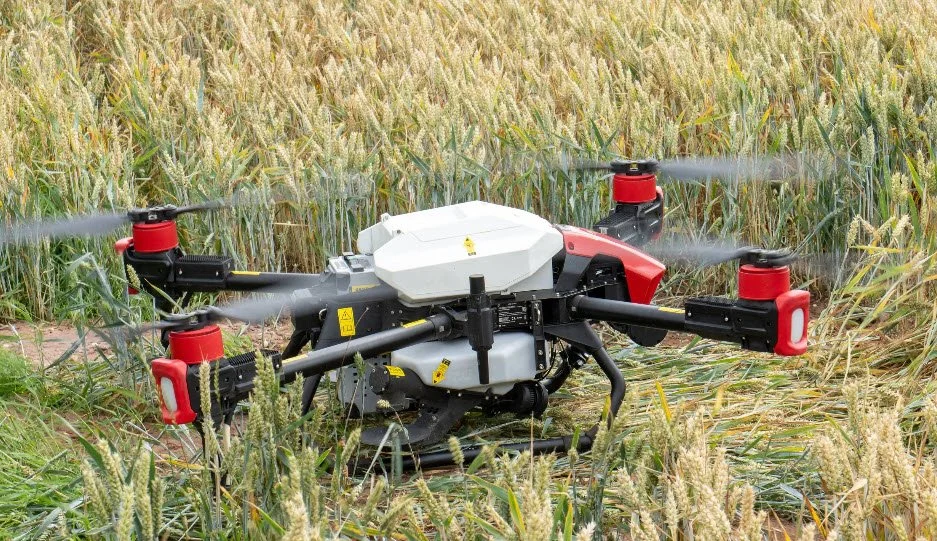
There is also the timing advantage. With a drone, you can be out in the field as soon as the weather breaks, even if the soil is still a bit damp. That flexibility is huge for UK Agriculture, where the weather can change in a heartbeat. I have had springs where the window for drilling spring barley closed overnight, and a drone would have given me an extra day or two to get the seed in the ground. That can make the difference between a decent crop and a failed one.
However, there are trade-offs. Drones have a high upfront cost, and the batteries only last about 20 to 30 minutes per flight. You need to factor in charging time and the cost of a generator if you are working away from a power source. Also, the weather limits you. Strong winds, rain, and even heavy dew can affect the spread pattern and the accuracy of the flight. So it is not a silver bullet. But for the right jobs, it is incredibly effective.
The Practical Side of Going Aerial
If you are thinking about using a drone for seeding, here are a few things I have learned from experience. First, do a test flight over a tarp or a sheet to see how the seed lands. You will often find that the edges of the swath get fewer seeds than the middle, so you may need to overlap slightly. Second, watch the wind. Even a light breeze will blow fine seed off target. The best conditions are early morning or late evening when the air is still. Third, plan your flight lines with the Flight Planning Software to avoid gaps. Most software lets you set the swath width, and you should use the actual spread width, not the maximum, to get even coverage.
Another tip is to think about the seed rate. When you broadcast on the surface, you generally need a higher rate than if you drill it in, because some seeds will not germinate. This is where Variable Rate Seeding can help you save money by applying more seed on the areas that need it and less on the rest. It is a balance between seed cost and establishment, and it takes a bit of trial and error to get right. But the data you collect from the drone's flight logs can help you refine your approach over time.
One more thing: check the regulations. In the UK, you need to follow the Civil Aviation Authority's rules for flying drones, and if you are earning money from it, you need a suitable qualification. Also, if you are claiming agri-environment payments, make sure your seeding method meets the scheme's requirements. Natural England and the Rural Payments Agency have specific rules about cover crops and green manures, and they are not always flexible. I have heard of farmers losing payments because they used a method that was not approved. So do your homework before you invest in a drone.
The Future of Seed Distribution
As battery technology improves and the cost of sensors comes down, I expect we will see more farmers and contractors adopting drones for seeding. The potential is huge, especially for cover crops and for reseeding grassland. There is also work being done on drone swarms, where multiple aircraft work together to cover a large area quickly. That could make efficient seed distribution even more viable for bigger farms. I am also watching companies like DroneSeed, which has been doing aerial reforestation with drones, dropping seed pods that are pre-germinated and coated. That technology could easily be adapted for agricultural use.
For now, the best approach is to think of drones as another tool in the toolbox, not a replacement for everything. Use them where they make sense: on awkward fields, for catch crops, or when the ground is too wet to travel. The key is to plan carefully, calibrate your equipment, and work with the weather. When you do that, the results are impressive. I have seen fields that were flown with a drone come up just as well as those drilled, and in some cases better, because the seed was placed at the perfect time.
So if you are a farmer or an agronomist looking to improve your establishment without adding more machinery, it is worth exploring what a drone can do. It might not replace your John Deere, but it could save you time, fuel, and soil health. And in a year like this one, when the weather seems to have its own mind, having that flexibility is priceless.